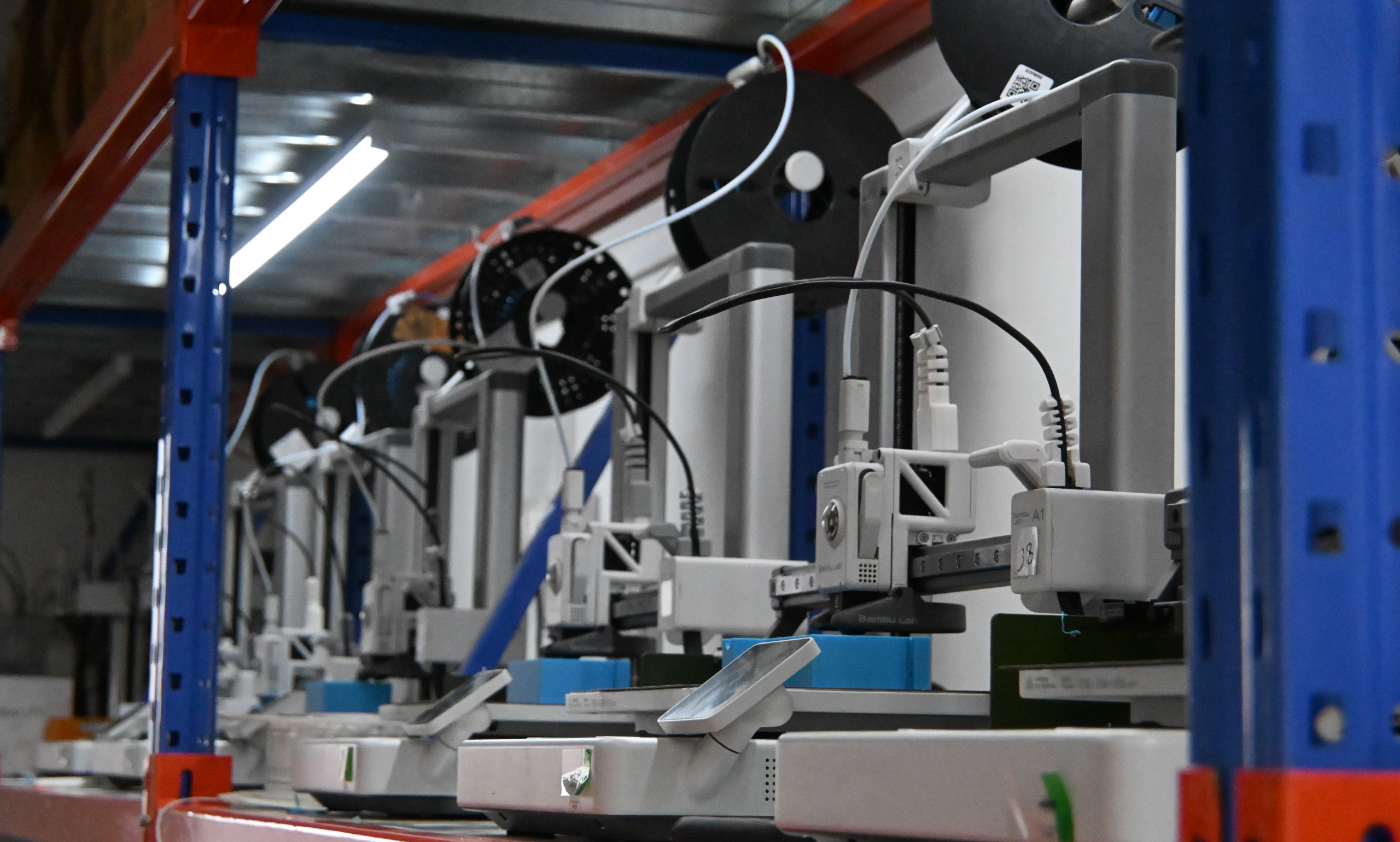
Fused Deposition Modelling (FDM) is a type of 3D printing where objects are built layer by layer using melted material. A thermoplastic filament is heated and pushed through a nozzle, which moves along a path and deposits the material precisely. As each layer cools and solidifies, the form gradually builds up into a complete three-dimensional object.
Unlike traditional manufacturing methods that cut away material from a larger block, FDM adds material only where it is needed. This reduces waste and allows more control over how a product is formed.
How Does It Work?
The process begins with a digital 3D model, which is divided into thin horizontal layers using software. The printer then follows this data, depositing material layer by layer to recreate the design physically.
Because the material is placed with precision, FDM makes it possible to control not just the outer shape, but also the internal structure of an object. We can adjust parameters like layer thickness, path direction, and density to influence strength, flexibility, and weight.
This is especially useful for creating complex geometries such as lattice structures, that would be difficult or impossible to produce using conventional methods.
How Does It Work?
In the EcoLattice system, the technology is being used to translate digital designs directly into functional products. It allows lattice structures to be printed as continuous forms, where variations in density and geometry are built into the object itself rather than added later.
This means different levels of softness or support can be achieved within a single piece, without assembling multiple materials. It also removes the need for moulds, making the process faster and more adaptable.
As a result, FDM enables customisation at scale, each product can be adjusted to specific user needs while using the same overall production system. In this way, the process is supporting not just how things are made, but how they are designed and experienced.
Team EcoLattice