Understanding Neutral Sitting Posture
Sitting at work is something most of us do for hours without thinking about it, and that inattention has a cost. Poor sitting posture is one of the leading contributors to back pain, muscle fatigue, and long term musculoskeletal problems in desk workers. Getting it right doesn’t require constant effort; it requires understanding what your body is actually asking for.
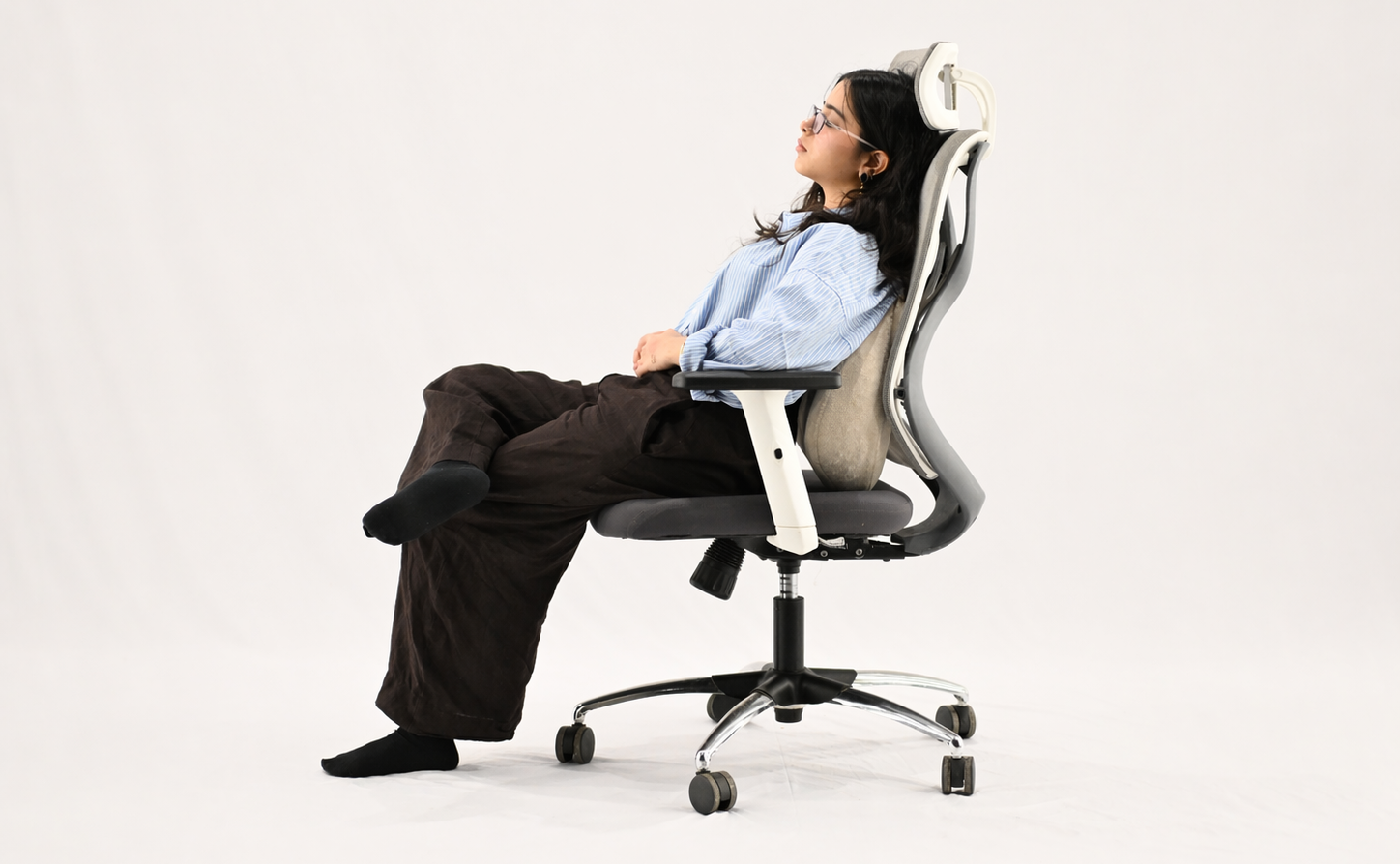
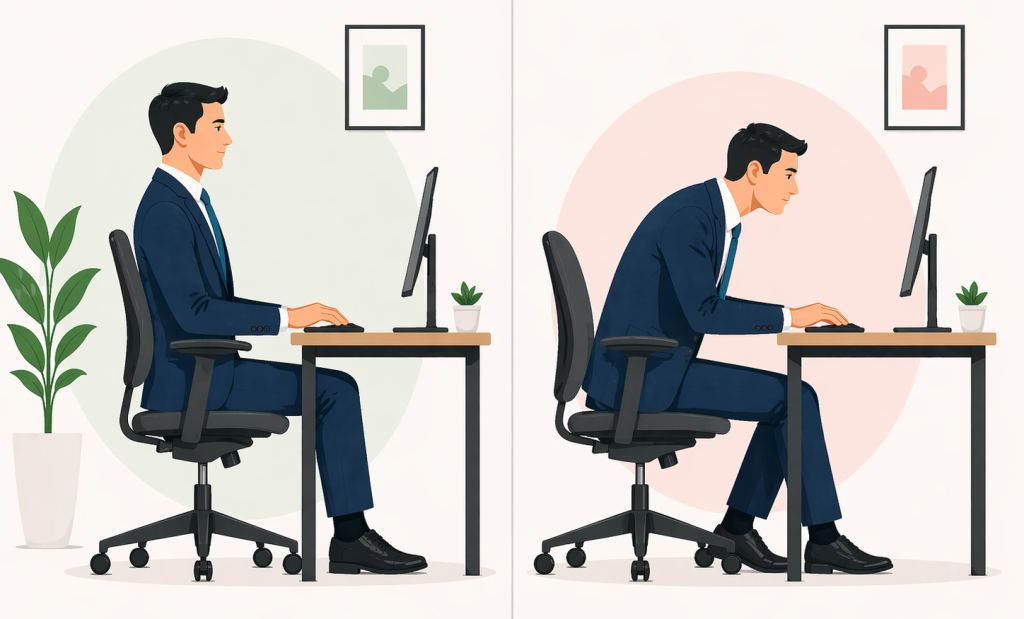
A neutral sitting posture means positioning your body so that muscles and ligaments are under minimal strain. Practically, that looks like this: spine upright with its natural S-curve supported, shoulders relaxed and sitting back rather than rounding forward, and your head balanced directly over your spine, not drifting forward toward the screen. Your feet should rest flat on the floor, with knees at roughly hip level or slightly lower, creating a stable, grounded base.
This alignment matters because it distributes your body weight evenly across the pelvis and lower back, rather than concentrating pressure in one area. Slouching, forward head posture, and uneven spinal loading, the three most common desk work problems, all emerge when this alignment breaks down. A chair that actively supports the lumbar curve and offers adjustability in height and backrest angle is not a luxury; it is the foundation of sustainable sitting.
Positioning Your Desk Setup Correctly
Posture doesn’t exist in isolation. It responds to your environment. Even someone who understands neutral alignment will struggle to maintain it if their workstation is set up poorly.
Your monitor should sit at eye level and approximately an arm’s length away, with the top of the screen aligned with or just below your natural sight line. This prevents the chronic neck flexion that comes from looking down at a laptop, or the upward tilt that strains the cervical spine when a screen is too high.
Elbows should stay close to the body and bent at around 90 degrees when typing, with forearms parallel to the floor. Your keyboard and mouse should be positioned so that your shoulders can remain relaxed, not raised, not reaching forward. If your desk height forces any of these to shift, you’ll compensate elsewhere, and that compensation accumulates into discomfort.
If your feet don’t comfortably reach the floor, use a footrest. It sounds minor; it isn’t. A stable foot position anchors the whole postural chain from the ground up.
Movement, Breaks, and Postural Awareness
Here’s the thing about perfect posture: even perfect posture, held rigidly and without interruption, becomes a problem. The human body is not designed for stillness. It is designed for movement, and when you deny it that, circulation slows, muscles stiffen, and fatigue sets in regardless of how well you were sitting.
The practical solution is simple: move. Stand up, stretch, or take a short walk every 30 to 60 minutes. These micro breaks reset both your body and your attention. They don’t require a standing desk or a structured routine, just the habit of not staying still for too long.
Postural awareness operates on a smaller scale throughout the day. Subtly shifting your weight, adjusting how you’re sitting, periodically checking whether your shoulders have crept upward or your head has drifted forward, these small resets prevent the body from settling into patterns it will later protest. The goal isn’t a static ideal. It’s an attentive, adaptable relationship with how you’re sitting.
In Conclusion
Good workplace sitting is a combination of three things: aligned posture, a sensibly arranged workstation, and regular movement. None of the three works well without the others. When they come together, the result is less physical strain, more sustained comfort, and a body that holds up well over years of desk work, not just the next few hours.
Team EcoLattice