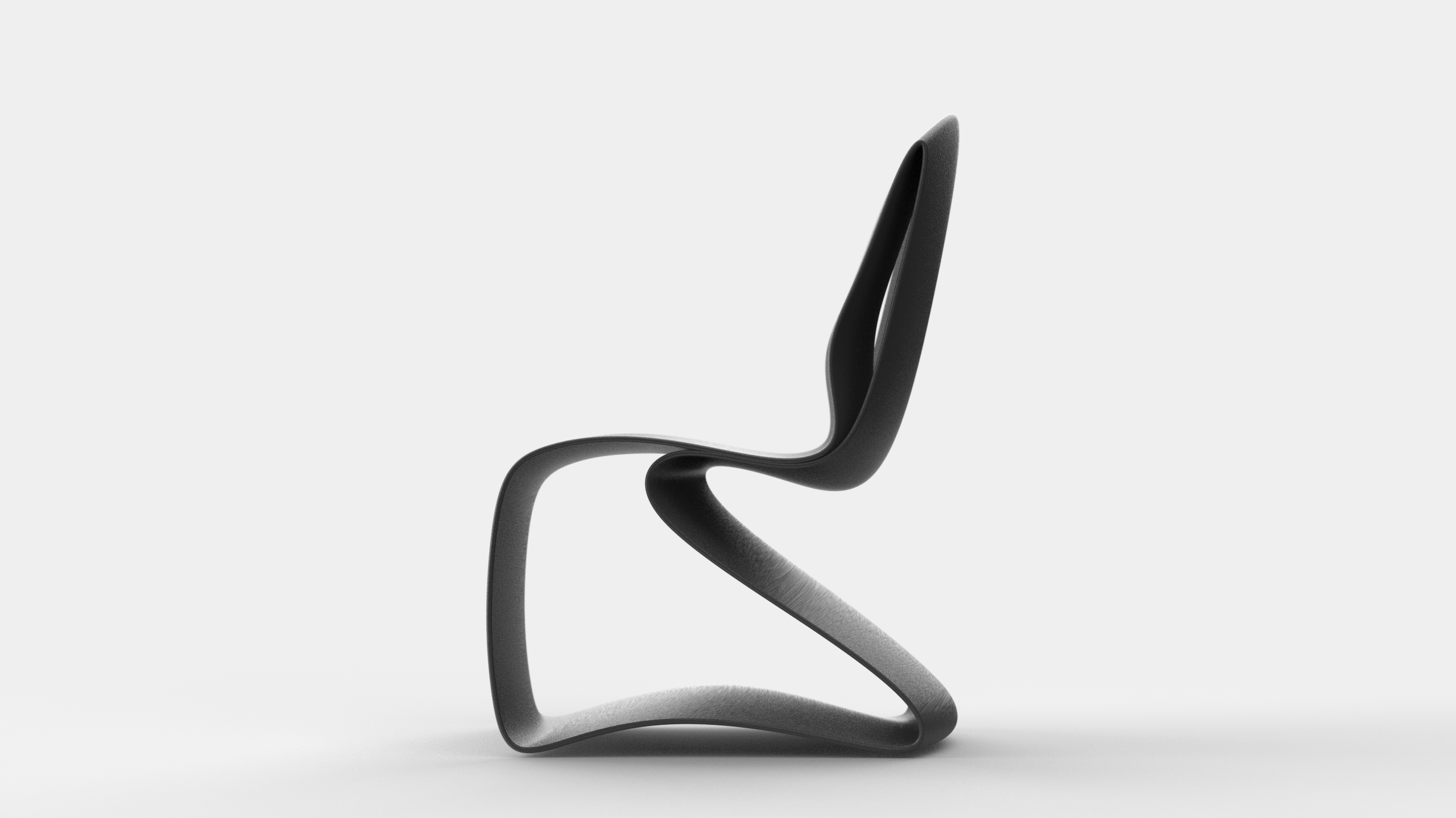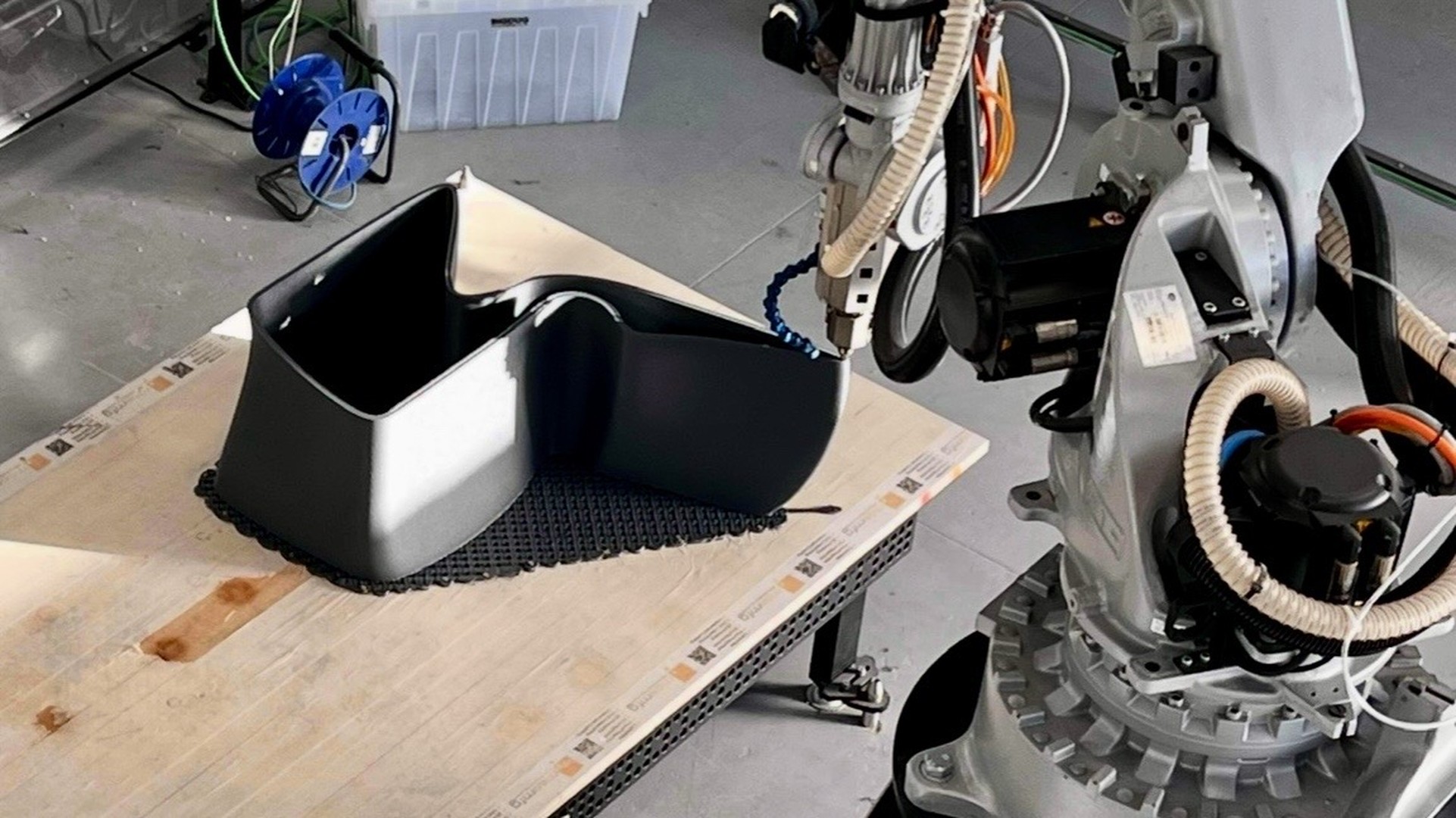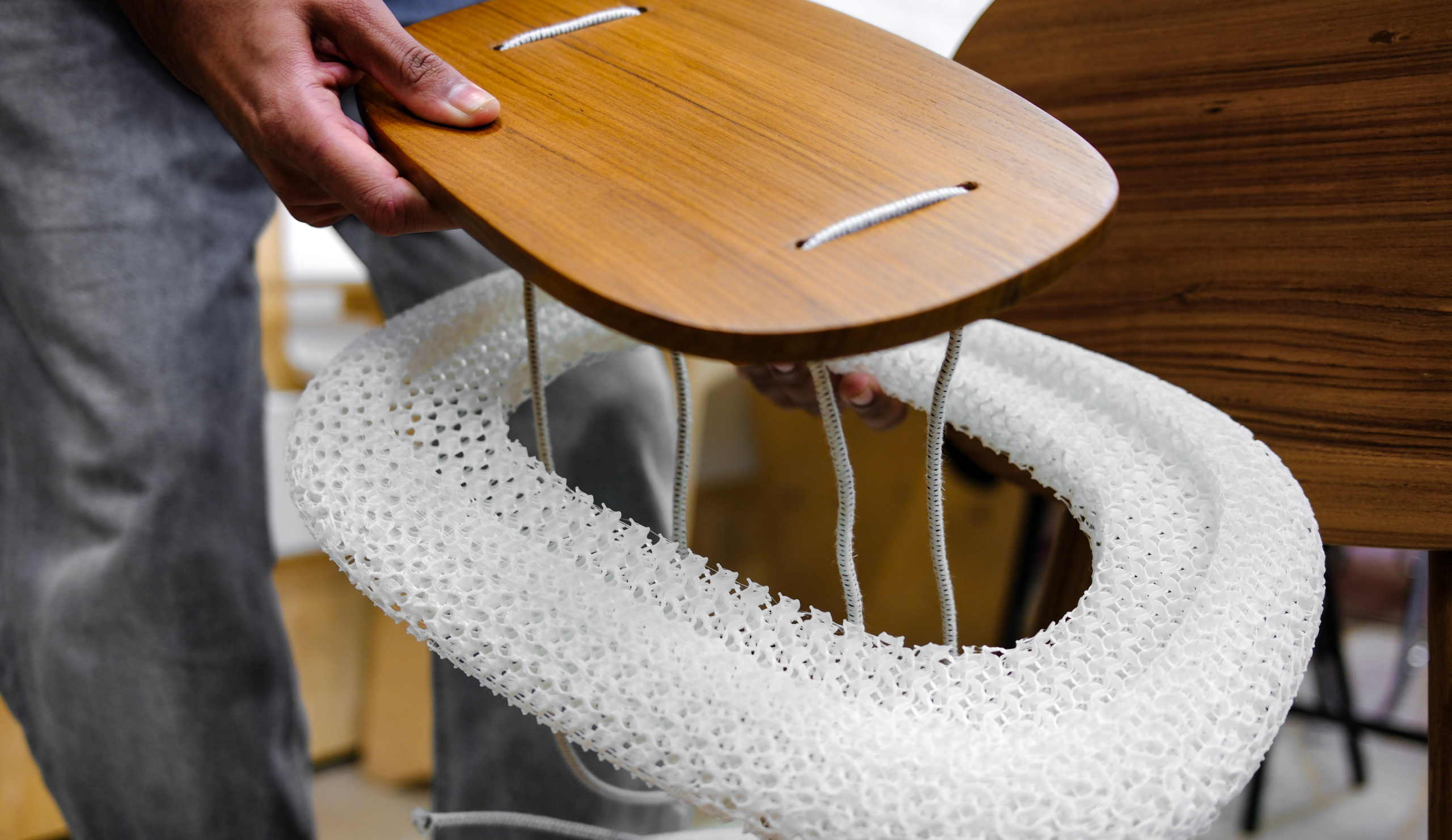

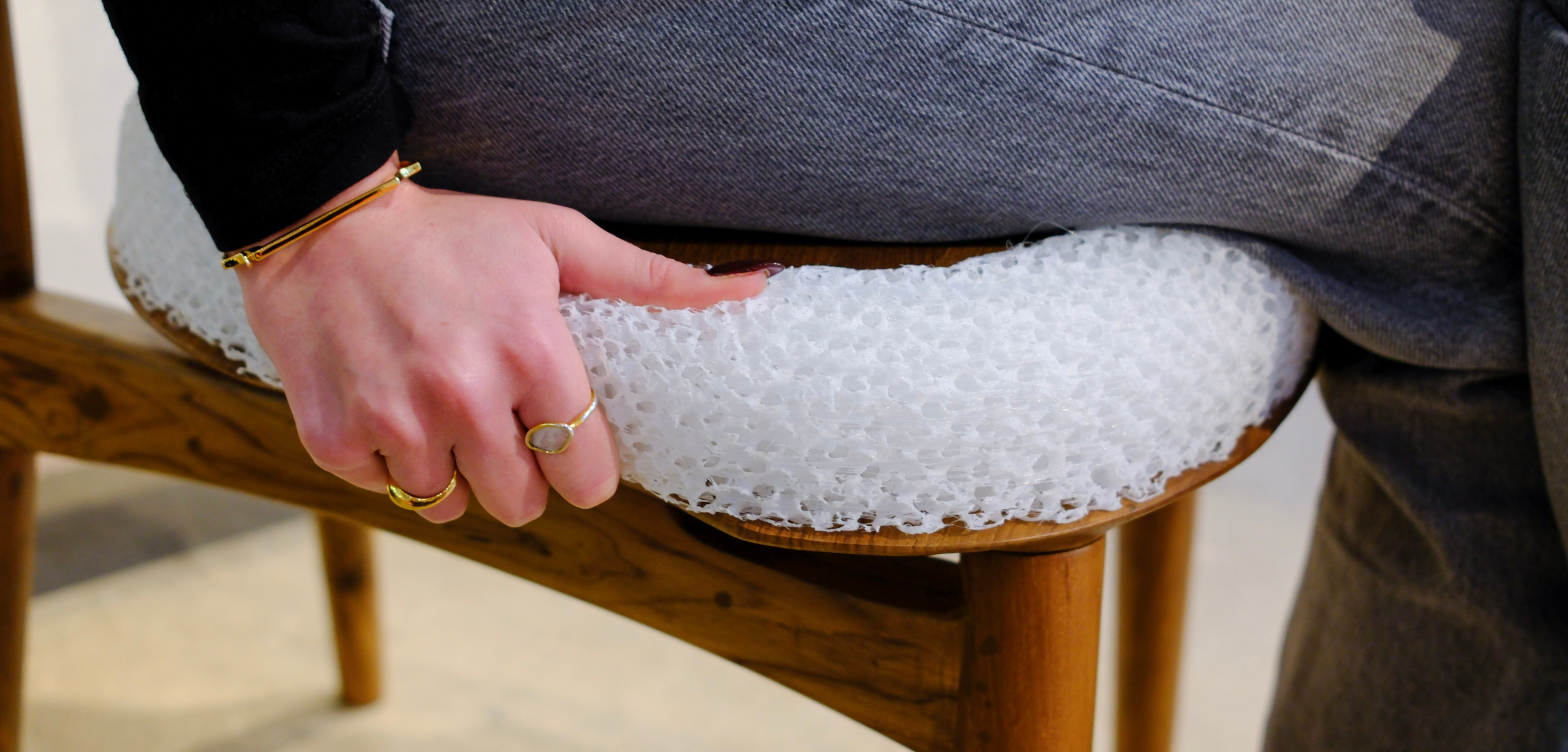
At the core of this approach is the lattice structure, a three-dimensional open geometry formed by a network of repeating unit cells. Engineered through parametric design and produced via additive manufacturing, lattice structures replace solid mass with precisely arranged geometry, allowing density, stiffness, and flexibility to be tuned across different zones of a single continuous form.
A Shift Toward Performance Driven Design
We see product design steadily moving toward a more performance driven approach, where efficiency, comfort, and responsiveness are not secondary considerations but central to the design process. Traditional systems have often relied on adding more material to achieve strength or durability, resulting in heavier, more complex constructions. Today, that approach is being questioned. There is a growing emphasis on doing more with less, where the focus shifts to how intelligently a system can perform rather than how much material it contains.
Lattice structures represent this shift in a fundamental way. By replacing solid mass with engineered geometry, they allow products to achieve strength, flexibility, and resilience through structure rather than volume. This not only reduces material usage but also enables products to respond more dynamically to real world conditions. As a result, design begins to move toward systems that are lighter, more efficient, and better aligned with the needs of the user.
From Material to Structure
Our approach begins by rethinking the role of material itself. Instead of treating it as a continuous, uniform block, we explore how it can be strategically distributed through internal structures. Lattice systems make it possible to design with variation, where different areas of a product can perform differently based on their structural configuration. By adjusting parameters such as cell size, density, and arrangement, we can influence how a product behaves under pressure, how it flexes, and how it returns to its original form.
This introduces a more nuanced way of designing, where geometry becomes a critical tool in shaping performance. Areas that require greater support can be reinforced through denser structures, while zones that benefit from flexibility can remain more open and adaptive. This level of control allows for a more precise relationship between form and function, moving beyond uniform materials toward systems that are tailored to specific performance needs.
Performance Embedded in Design
One of the most significant advantages of lattice structures is their ability to embed performance directly within the design. Functions such as cushioning, impact absorption, and airflow can be achieved through the structure itself, rather than by layering multiple materials together. This reduces the need for complex assemblies and allows for more integrated, efficient systems.
At the same time, advancements in additive manufacturing and computational design have made it possible to realize these structures with a high degree of precision. Complex geometries that were once difficult to produce can now be designed, tested, and manufactured with greater accuracy. This not only expands the possibilities of what can be created but also allows for continuous iteration and optimization, leading to systems that are both high performing and materially efficient.
For us, lattice structures are not just a technological advancement, but a way of rethinking how products are designed and experienced. They align with our focus on creating systems that are materially efficient, structurally intelligent, and responsive to the human body. Through this, we aim to develop solutions that are not only high performing, but also consciously designed for a more responsible future.
Team EcoLattice