At EcoLattice, sustainability is not treated as an addition at the end of a process but as a starting point. The work began with a fundamental question: can cushioning be rethought by reconsidering both material and structure?
This perspective shifts the focus from what materials are made of to how they behave, how they are processed, and how they perform over time. It positions sustainability as a design decision rather than a material label.
Rethinking Material Use and Impact
The furniture industry has traditionally prioritised performance and cost, often relying on materials such as conventional foams as core, support board, interliner and fiber fill for structure and better cushioning effect. While effective in use, these materials are difficult to recycle and depend on resource intensive processes.
As environmental concerns continue to grow, this approach is being questioned. There is a clear need to move away from linear systems and towards approaches that consider reuse, recovery, and long term impact. This shift is not only necessary but also opens up new ways of thinking about how furniture can be designed and made.
Sustainability, therefore, cannot be defined by a single material choice. It emerges from considering the full lifecycle of a material, including sourcing, processing, use, and potential recovery. A material may be recycled or bio based, but its impact depends on how long it lasts and whether it can re-enter a material cycle.
This requires a shift from isolated decisions to system level thinking, where durability, efficiency, and end of life are addressed together.
Designing for Efficiency, Not Excess
Sustainable outcomes are closely tied to how materials are used. Instead of increasing volume to achieve comfort, design can be used to control where and how material is placed.
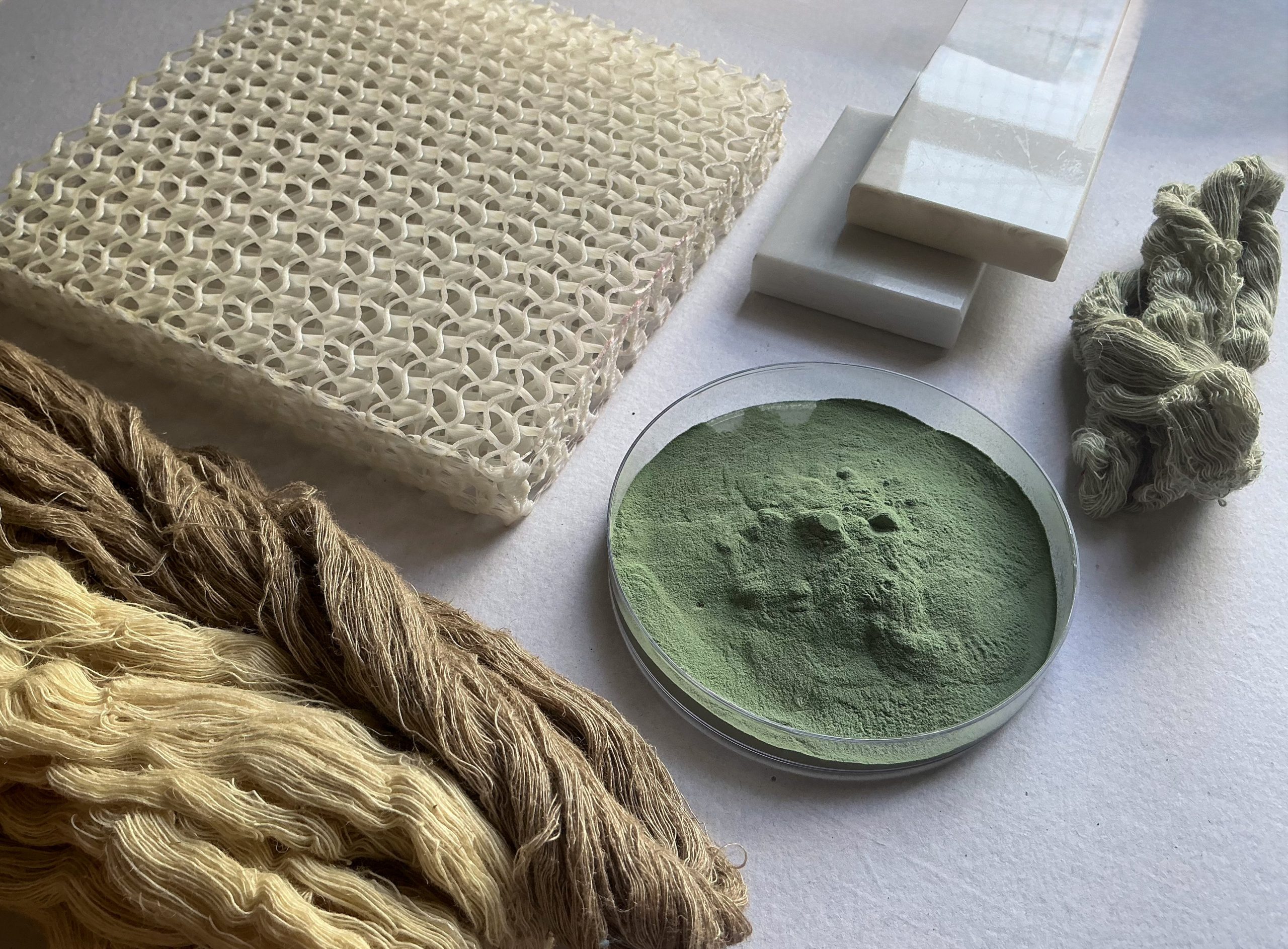
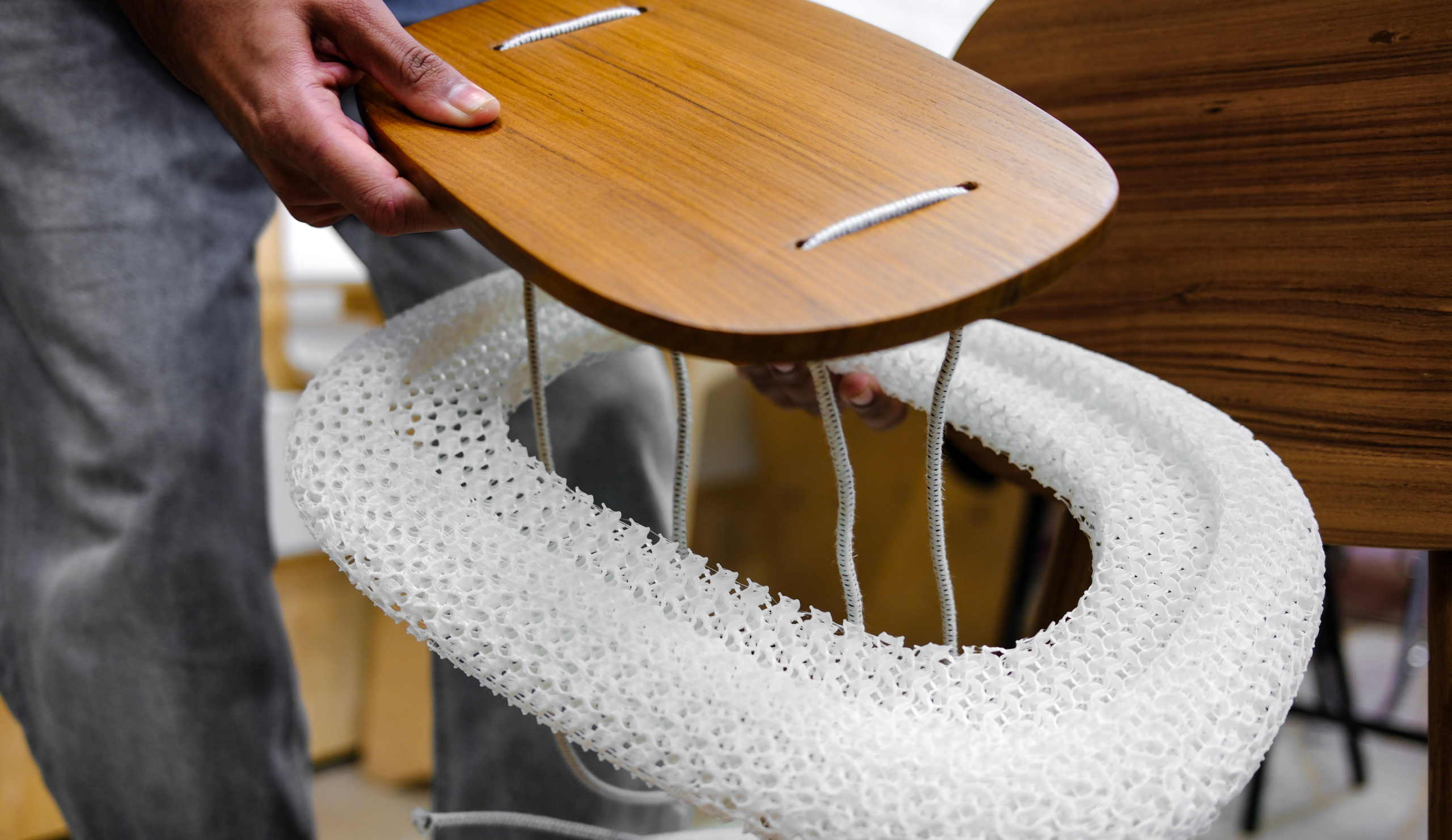
By working with lattice structures and additive manufacturing, material can be distributed with precision, allowing structure to replace excess. This approach reduces waste while maintaining functional performance. At the same time, designing systems that can adapt or be repaired extends product life and reduces the need for replacement.
Conventional cushioning systems rely on bulk materials, where comfort is achieved through uniform compression. Over time, this leads to compression set and fatigue, particularly in high pressure areas, while layered constructions make recycling difficult.
An alternative approach shifts from material volume to structural performance. Controlled geometries such as lattice structures allow stiffness and deformation to vary across a surface, enabling more efficient load distribution. Combined with responsive materials, this creates cushioning systems that use less material while maintaining performance and allowing adaptability through design rather than bulk.
Towards Responsible Material Systems
Sustainability must work alongside performance. Furniture still needs to provide comfort, durability, and safety in everyday use. Instead of adding more material to meet these requirements, structure and material behaviour can be tuned to achieve them more efficiently.
At EcoLattice, this is approached through the development of integrated material systems, where structure, material, and performance are considered together. The aim is to create solutions that reduce material use while maintaining long term functionality.
This reflects a broader shift in furniture design. Rather than focusing only on materials or form, there is a move toward systems that consider how products are made, how they perform, and how they exist over time. Within this shift, sustainability becomes an outcome of thoughtful design decisions rather than an afterthought.
Team EcoLattice